Radio Samoa 1593AM
News that reaches Facebook without anyone posting by hand. A Samoan station on air in Auckland since 1999 handed EONE its sales, marketing and news site.
The problem
Radio Samoa and Samoa Times shared a parent company. When Samoa Times closed during COVID, its news needed a new home. The news grew but the team did not: every story was posted to Facebook by hand, the morning bulletin went out on air and was gone by 9am, and comments were switched off twice by the services that ran them.
What EONE took on
Sales, marketing and campaign design for the station, the public news site, and the daily publishing work behind it: social posts, audio, video and comments.
What was built
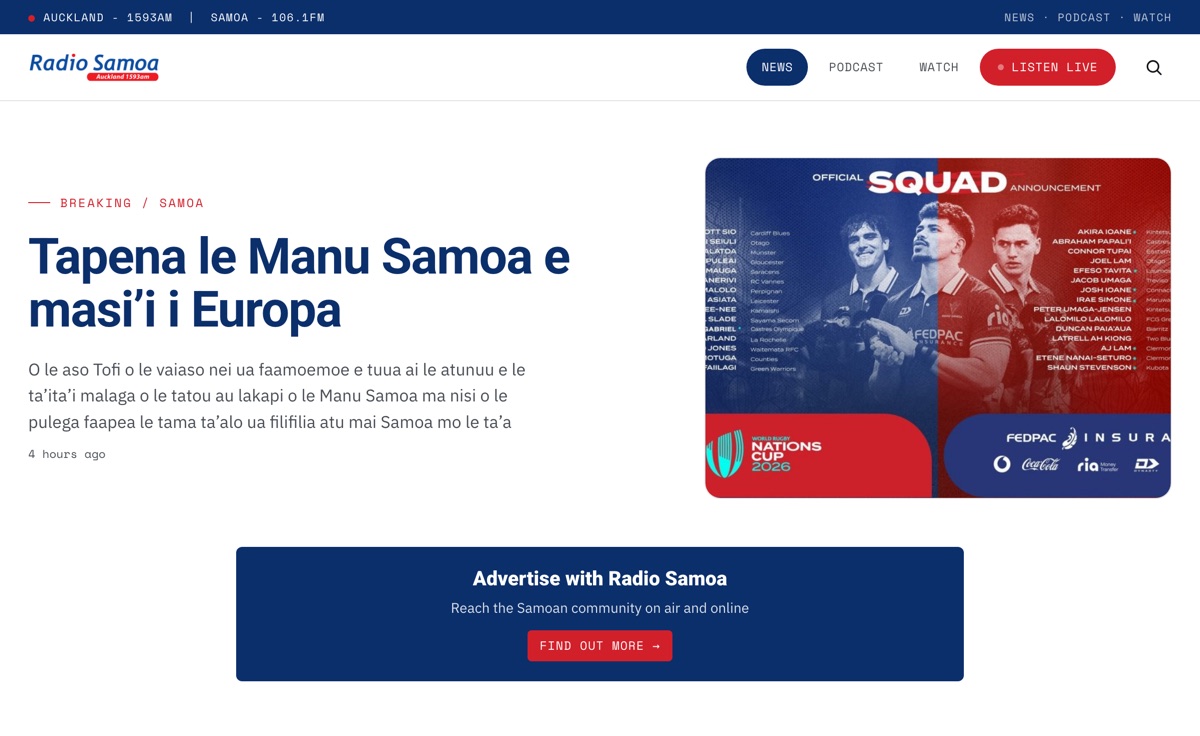
- Web. WordPress kept as the newsroom. The public site rebuilt in Astro as static pages: over 18,000 stories, rebuilt within minutes of each publish.
- Social. When a story is published, a branded graphic is made from its headline and photo. The photo is sharpened and levelled, and the first sentence becomes the caption. It posts to the Facebook Page with the link in the comments, but only once the story page is live, so there are no dead links.
- Audio. The bulletin is emailed in and transcribed. The interview is found using the script, then cut and published to a self-hosted player inside the story. Doubtful cuts are flagged, and writers trim them in the browser.
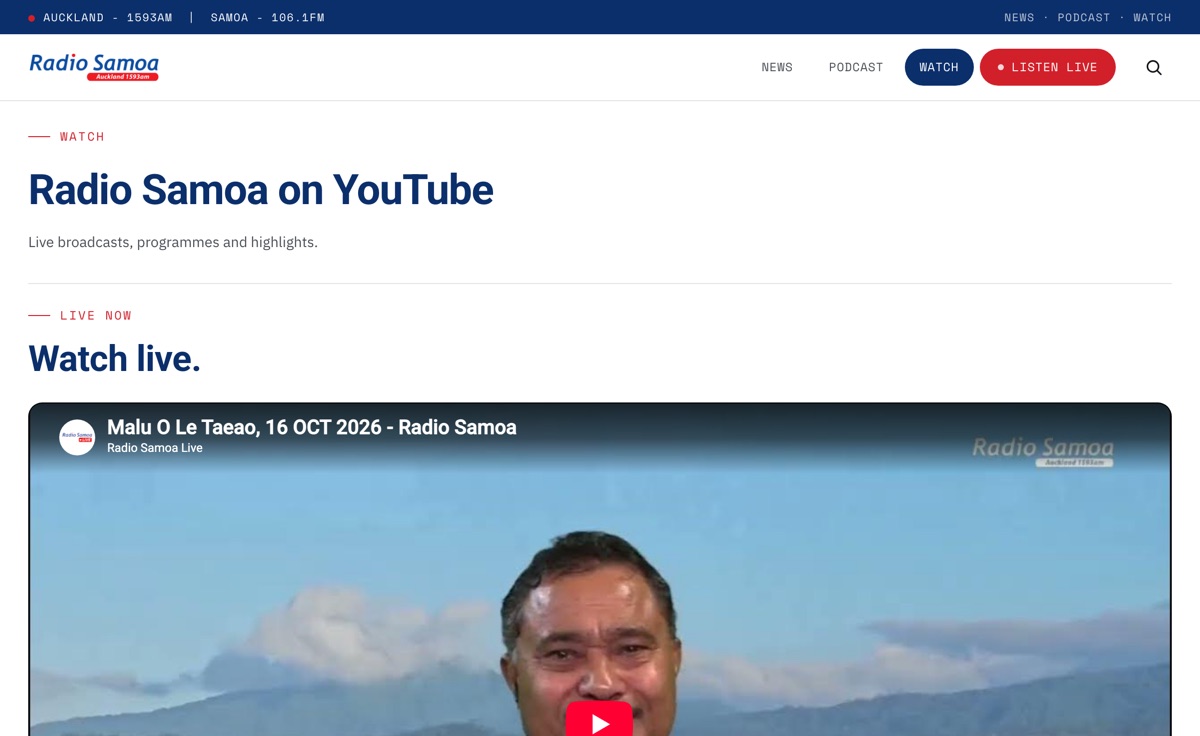
- Video. The same bulletin becomes Tala Fou Mai Samoa: a waveform, a headline rundown and the current story lit up. It is rendered and posted to YouTube and Facebook every weekday.
- Comments. Stored in Radio Samoa’s own WordPress, with Google or Facebook sign-in checked on the server, so no third party is able to shut them down.
- Sales. A media kit, sales flash cards and advertiser pages. Sina, an advertising assistant, runs on free Cloudflare AI. AdSense was removed and ad slots are sold direct.
- Numbers. Bot traffic stripped out of analytics, and claims without a source taken off the sales pages.
The outcome
Stories reach Facebook with a branded graphic and nobody posting by hand. The morning bulletin now lives past 9am, as an interview on the site and a full video on YouTube and Facebook every weekday. The full archive is online and fast, static hosting and free-tier AI keep running costs small, and every number in the sales pitch has a source.
Lessons learned
- Post only when the page is live. Checking the story page before posting to Facebook removed dead links.
- Let people check what automation is unsure about. Doubtful audio cuts go to a writer to trim, instead of going out wrong.
- Own what others have switched off. Comments moved into Radio Samoa’s own site after two outside services shut theirs.
- Put a source behind every sales number. An unsourced claim costs more trust than it wins.